Workshops
We offer a number of rotating workshops hosted by local experts.
Broadening Ocean Acidification Teaching & Learning (BOATL): Understanding Climate Change and Ocean Acidification
Professional Development Workshop Series
Click Here to Apply!
Natural History Museum of Cal Poly Humboldt and the NOAA Ocean Acidification Education Mini-Grant Program are partnering with the Humboldt County Office of Education and the Telonicher Marine Lab to offer a Professional Development Workshop Series: Broadening Ocean Acidification Teaching and Learning (BOATL): Understanding Climate Change and Ocean Acidification.
This fall, over two Saturday workshops, the BOATL workshop series will provide professional development for middle & high school science educators to enrich their pedagogical practices and conceptual understanding with a deep dive into the urgent issue of ocean acidification.
The series will connect local scientists, indigenous knowledge holders, and fellow educators for an immersive exploration of the powerful connections between climate change and the ocean, with the aim of increasing ocean science education, specifically in concepts critical to understanding and mitigating ocean acidification.
The workshop series is a rare opportunity for teachers to meet and work with the scientists and indigenous community members and focus collectively on increasing ocean literacy, specifically around ocean acidification. By the end of the workshop, teachers will be ready to teach a robust unit on ocean acidification, local scientists will have had an opportunity to share their work and also gain some insights on reaching a broader audience, and participants will have deepened connections to colleagues and community members who share expertise on climate change and ocean acidification.
During the workshops teachers will work with other educators to plan for enhanced ways to teach climate science and about ocean acidification in their classroom. After the workshop educators will continue developing their plans for implementing climate change and ocean acidification education into their classrooms making use of BOATL materials (as they see fit for their classrooms). The BOATL team will be asking for feedback from teachers to aid in further refinement of BOATL teaching materials.
What You’ll Gain:
A deeper content knowledge of ocean-climate systems
Insights into the causes and impacts of ocean acidification
Engagement with local scientists and indigenous leaders/educators
Ready-to-use classroom materials and resource kits grounded in Traditional Ecological Knowledge
Hands on experiences with lessons and teaching resources
Professional development hours and a certificate of completion
For classroom teachers- stipend of $750 upon completion of workshops and course work
Location: Telonicher Marine Lab, Trinidad, CA
Dates: Two Saturdays- October 24th and November 14th, 2026, with additional independent study and/or classroom implementation
Time: 9:00 AM – 3:30 PM each day, with a working lunch, six hours of follow-up study and/or classroom implementation.
Audience: Middle & high school science teachers, preservice teachers, and graduate students (preservice teachers and graduate students please email Dr. Jeffrey White for a student application at jww12@humboldt.edu)
Stipend: $750 (for teachers completing both workshop days and follow-up study/planning/implementation
Course Credit: 1 unit available for purchase (will be posted Spring 2027)
Questions: For additional information for specific questions, please email NHMeducation@humboldt.edu
Click Here to Apply!
Track and Sign Workshop and Certification
Track and Sign Workshop and Certification
September 12 & 13, 2026 From 8am to 5pm each day starting in Arcata and traveling around 45 minutes to nearby field locations.
Workshop Description
CyberTracker Certification (Track and Sign) offers a unique experience for naturalists of all experience levels looking to develop their wildlife tracking skills and learn to read the stories animals leave on the landscape. Participants will go through 56 examples of wildlife tracks and sign together, first with all participants coming to their own independent identifications and interpretations, then discussing our interpretations as a group and receiving feedback and instruction from the expert evaluator. Each day will start in Arcata and participants will be traveling around 45 minutes to nearby field locations. There are only ten spaces and some have already been purchased, so if you are interested please sign up soon!
This certification is internationally recognized as the only objective certification process for quantifying the abilities of trackers, so participants in certifications can walk away with resume-building qualifications in addition to the learning experience of the workshop. No prior experience is required and naturalists and trackers of all experience levels can benefit equally from the certification process. The certification process provides an unparalleled learning experience by combining the elements of a certification with a workshop. You are guaranteed to learn a lot. LIMITED TO 10-12 PARTICIPANTS
For more information on Tracker Certification: https://trackercertification.com/what-to-expect/
Instructor Introduction
Phil Johnston is a Track and Sign Evaluator and is passionate about making wildlife tracking a more accessible skill to people from all walks of life. He is biologist for the CDFW, has worked in Hoopa, and conducts mountain lion research. He is also pioneering non-lethal strategies to protect endangered Sierra bighorn from mountain lion predation. Phil Johnston is a great instructor and has led many tracking workshops with the museum in the past.
Registration, Fees, Scholarships, and Refunds
Register online here!
$500 per participant
$450 Natural History Museum member discount price
Each registration includes a $100 non-refundable fee. A partial refund will only be issued if you send a cancellation request with request for refund in writing via email addressed to natmus@humboldt.edu by Friday, September 4 at 5pm. NOTE: The workshop requires a minimum of 9 people registered. If the workshop is cancelled due to low enrollment full refunds will be issued.
You will receive an email with additional details about where to meet and what to bring the week before the workshop. If you have additional questions email the Natural History Museum at natmus@humboldt.edu including Tracking Workshop in the subject line of the email.
Scholarships – Due to a generous community donation to the NHM we have a couple of partial scholarships available. Scholarship recipients will be offered half price registration. In order to apply for a scholarship, send an email to natmus@humboldt.edu with the subject Tracking Workshop Scholarship Request. In the email, please include a little bit about you, your interest in this workshop, and how a scholarship for the workshop would benefit you. Please also include a phone number where you can be reached.  cyber_tracking_workshop_final_v4.pdf
Introduction to the Willows of California (Salicaceae) Spring 2025
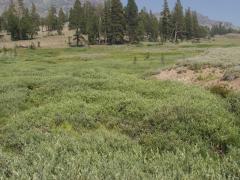
Workshop 1: Saturday, April 26, 2025 Cal Poly Humboldt 9am - 5pm
OR
Workshop 2: Sunday, April 27, 2025 Cal Poly Humboldt 9am - 5pm
California is home to over one quarter of the estimated 120 willow species growing in North America. Cottonwoods and willows are the most common riparian hardwood species in California. Identification to species is often neglected because willows are thought to frequently hybridize. When only vegetative materials are available in the field, identification can be further hindered because we think we need flowers to make a positive identification. The workshop will focus on the leaf, stem, and other vegetative growth characteristics that are useful in making identification while also emphasizing differences within species across their regional distributions. The goal of the workshop is to provide a broad overview of willows, highlight vegetative characteristics used in the identification keys in The Jepson Manual (second edition) and familiarize participants with the six most common willows in California.
The workshop will include a presentation focusing on the overall willow family taxonomy, taxonomic changes in the second edition of the Jepson Manual, geographic distribution, how to look at willows to make a successful identification, and key identification characteristics. Fresh cottonwoods and willows material will be available to illustrate the variety of vegetative and flowering characteristics used in The Jepson Manual 2 keys. Bring in your problem willows and we will apply our new willow skills to identifying them together. Additionally, the instructor will provide an overview of willow family ecology and briefly cover use of willows and cottonwoods in restoration projects. Participants should bring a hand lens, dissection equipment including extra-fine forceps, and a copy of The Jepson Manual 2. All experience levels are encouraged to participate.
Cost: $35 for Cal Poly Humboldt or College of the Redwoods students; $150 for California Native Plant Society (CNPS) or Natural History Museum (NHM) members; and $200 for non-members.
Registration: Register Saturday, April 26 workshop here or for Sunday, April 27 Workshop here or in person at the Natural History Museum of Cal Poly Humboldt (1242 G Street, Arcata, CA 95521). NOTE: This is a one day workshop that is repeated twice.
About the Instructor: The workshop will be led by John Bair, who is a recognized expert in willow and cottonwood taxonomy and physiology. John has investigated the inter-relationship between riparian plant establishment, geomorphology, and hydrology to recommend flow management and channel restoration approaches. He earned his Master’s degree working with Dr. John Sawyer at Humboldt State University, analyzing riparian initiation and establishment processes on the Trinity River. His special interests include the effect of streamflow regulation on Salicaceae.
A little more about the instructor: Mr. Bair is a botanist/plant ecologist that has focused on the inter-relationship between riparian plants, geomorphology, and hydrology for 22 years. He is a recognized expert in willow and cottonwood taxonomy. He has developed flow management and channel restoration approaches that improve the ecosystem conditions on regulated rivers. Mr. Bair has developed the Tool for Achieving Riparian Germination and Establishment of Target Species (TARGETS-2D) model to assess the success of managed streamflows at promoting the colonization of floodplains. The model is based on the relationship between seed dispersal period of riparian hardwoods, root growth rate, soil capillarity, channel topography, and streamflow magnitude and recession rate. The model has been applied successfully on many rivers in California. He has developed riparian restoration strategies to combine active revegetation (i.e., plantings) with passive opportunities provided through streamflow management throughout Northern California and the Central Valley and designs that combine active revegetation with passive opportunities provided through tidal restoration in estuaries, coastal streams and rivers. Mr. Bair conducts and oversees study design, field data collection, plant ID, mapping and classification, and analyses of environmental variables. He has supported private, tribal, state, municipal, and federal agencies to clarify requirements and restrictions related to the implementation complex and large scale river restoration.
Polymer Clay Sculpting Middle School After-School Workshop
Polymer Clay Sculpting Middle School After-School Workshop Description: We are meeting on Wednesday April 2nd after school at 3:30 pm to 5 pm for a polymer clay sculpting class. We are focusing on middle schoolers because they are so talented, inspired, and have the ability to learn strong techniques. The participants can choose the subject they would like to make, and we have lots of reference animals and pictures in the museum to work from. All skill levels are welcome and we strive to create a supportive environment for individuals and art expression. We focus on where participants are at, and add tools or suggestions to their process. We have all the materials and can bake the creations so they may last. Polymer clay encourages smaller and highly detailed creations, there is always more to learn and try. Please feel free to reach out with any questions to natmus@humboldt.edu, we really look forward to seeing you!
Cost: $20 per participant per workshop, no refunds
Registration: Register online here or in person at the Natural History Museum of Cal Poly Humboldt (1242 G Street, Arcata, CA 95521), or by calling us at (707) 826-4480.
About the Instructor: Erielle Laura is a local artist and museum staff. She has a lot of fun creative prompts and can’t wait to inspire the next generation :)
Introduction to Carex (Sedges) Workshops (Spring 2025)
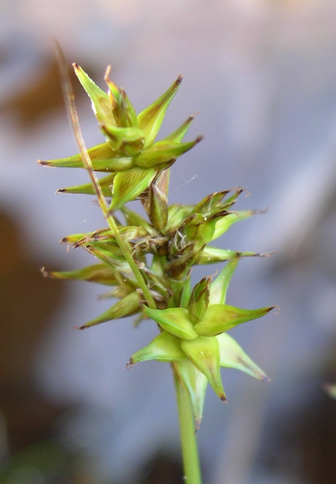
Workshop 1: March 17 ,2025 [FULL] Cal Poly Humboldt 9am - 5pm
Workshop 2: March 18, 2025 [FULL] Cal Poly Humboldt 9am - 5pm
Carex is the most speciose genus of flowering plants in California and North America, with over 80 taxa on the North Coast alone. It is also the largest genus of US Army Corps wetland indicator plants in California and the US. As well, there are more rare taxa in the genus than in any other genus in Northern California. Thus, the ability to sight-recognize and efficiently key sedges is critical to conducting wetland delineations, habitat assessments, rare plant surveys, and vegetation typing, as well as implementing habitat restoration and management plans.
With a strong emphasis on Northern California taxa, this workshop offers an intensive immersion into sedge terminology and morphology, and focuses on the identification and ecology of coastal and inland taxa. It begins with a basic review of sedge biology, morphology, and keying terminology. The rest of the workshop will be dissecting and keying specimens using a microscope and the Jepson Manual 2nd. Ed. or Jepson eFlora.
Workshop Objectives: This introductory workshop is suitable for those with beginning to intermediate experience with keying Carex. Principal workshop goals are to 1) increase understanding of common morphological terms used in the Jepson Manual 2nd. ed., the Jepson eFlora, and other floras; 2) demystify challenging or unclear key couplets; 3) review several complexes of similar or closely-related taxa, and; 4) increase familiarity with and improve sight-recognition of many common and rare Northern California taxa.
Cost: $35 for students $150 for California Native Plant Society (CNPS) or Natural History Museum (NHM) members, or students, and $200 for non-members.
Registration: The class is full, however you can add yourself to the waitlist here.
About the Instructor: Gordon Leppig is a retired Senior Environmental Scientist with the California Department of Fish and Wildlife and has been a student of sedges and wetland plants for over 30 years. He has taught CNPS Sedge workshops since 2003.
Questions: Registration questions can be sent to the Natural History Museum at natmus@humboldt.edu Course content questions can be sent to Gordon Leppig gtl1@humboldt.edu
